The Benefits of Telehealth — and Why Australians Are Choosing It in 2026
Updated: 22 hours ago
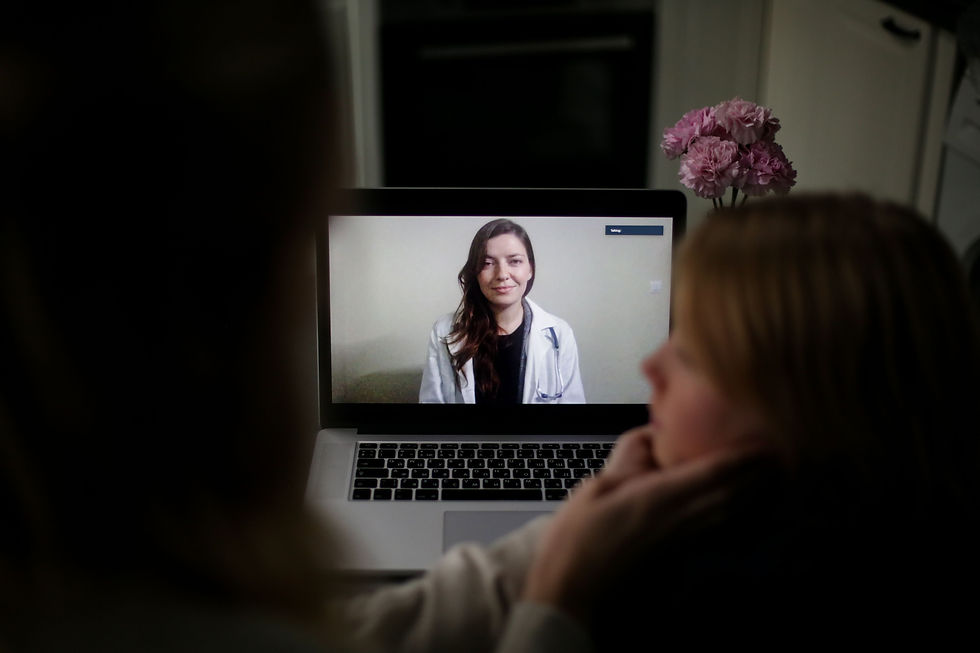
Ring your local GP clinic on a Monday morning and there's a chance you'll be offered an appointment the following week. If you're unwell now, that's not much use. It’s one of the reasons people try online consultations, and once they have, most of them return.
The Australian Bureau of Statistics found that 22.5% of us saw a health practitioner remotely during 2024–25, and of those who did, 90.3% said they'd do it again.
What is telehealth?
Telehealth means seeing a registered practitioner over video, phone, or secure messaging. Everything else about the appointment is the same as a traditional appointment: the practitioner is AHPRA-registered, your records are kept the same way, the same privacy obligations and duty of care apply.
How do telehealth consultations work
Most providers run a version of the same process. You fill in a form covering your history, current symptoms, and anything you've already tried. A clinician reads it and decides whether the service is right for you. If it is, you get booked in.
The consult itself is a conversation. The practitioner asks questions, you answer them, and a plan gets sorted. Where a prescription makes sense, it's sent electronically to a pharmacy you nominate. Follow-up appointments run the same way, but are usually shorter.
Types of healthcare services available via telehealth
GP consultations for common illnesses
Script renewals and repeat prescriptions
Mental health support
Chronic condition reviews
Specialist referrals
Physio, dietetics, and other allied health
Sexual and reproductive health
Medical certificates
The exceptions are anything requiring hands-on examination, imaging, or urgent intervention.
Why was telehealth invented?
Long before anyone called it telehealth, the same idea was running on radio waves out of Alice Springs.
In 1928, John Flynn started what became the Royal Flying Doctor Service, and an engineer named Alfred Traeger built a radio transceiver that ran off bicycle pedals so people on remote stations could reach a doctor without mains power. Homesteads hundreds of kilometres from anywhere could describe symptoms and get advice.
What changed in March 2020 was volume. When the Federal Government added Medicare-subsidised telehealth items in response to COVID, something niche became universal, with over 100 million services delivered in the first two years.
Why is telehealth needed today?
Bulk billing is harder to find
The pandemic justification expired years ago. However, bulk billing has become harder to find, waits for a routine GP appointment have stretched, and the shortage of practitioners outside capital cities has remained.
Everyday life is busy
On top of this are everyday obstacles: jobs that don't tolerate a long absence, no reliable transportation, small children, a waiting room full of other sick people when you're already run down…
A reasonable alternative to in-person appointments
None of that makes telehealth a substitute for in-person medicine. It makes it a reasonable option for the appointments that didn’t need a physical room in the first place.
Why is telehealth good for patients?
Many of the advantages come down to removing things that make an appointment hard to get to in the first place:
Shorter queues, and same-day appointments are common
Distance stops being a factor
No travel, parking, or waiting rooms
Clearer costs, since private providers tend to publish a flat fee
Easier to raise something awkward from your own home
Why is telehealth beneficial for ongoing healthcare?
If you're managing something long-term, the check-ins are relentless. Working out whether a medication is doing what it should, adjusting a dose, sorting a script, mentioning a side effect that's turned up… None of these require a physical examination, and yet they’ve traditionally involved a half-day round trip for what amounts to a five-minute conversation.
Maybe that’s why Australians living with a long-term health condition use telehealth at more than double the rate of those without one; 31.2% against 13.3%.
Who can benefit most from telehealth?
Anyone for whom the trip is the barrier can benefit from telehealth. That covers:
People in rural and remote areasAnyone with mobility limitations or no reliable transport
Shift workers whose hours don't line up with clinic hours
Parents and carers who'd otherwise have to arrange cover
People managing conditions that need regular review
Are there any limitations to telehealth?
Some conditions require referrals or physical assessment
Some presentations need pathology, imaging, or a physical assessment before anyone can responsibly decide anything, and a decent telehealth clinician will say so and refer you on.
Emergencies require urgent care
And emergencies are never appropriate for telehealth, so if it's urgent, ring 000 or go to your nearest emergency department.
Funding is limited
Funding is limited too. Medicare rebates generally require an existing relationship with the practice or MyMedicare registration. Private providers sit outside that and charge a flat fee instead.
Book a telehealth consultation with Altuva
If the waiting room is the part you'd rather skip, start with our free online screening at Altuva. It takes about five minutes, you don't need a referral, and our clinical team will review it at no cost and tell you whether we're able to help.
Not sure yet? Get in touch. We’re happy to answer questions about our intake process before you commit to anything.
This article is general information only and isn't medical advice. Treatment suitability varies between individuals and is determined by a qualified Australian healthcare practitioner.


Comments